Who I Am and Why Process Consolidation Matters
Process consolidation, defined plainly, is the deliberate work of identifying which workflows from two merging entities survive, which are retired, and which must be rebuilt from scratch. I have spent my career doing exactly that — mapping the invisible architecture of organisations and finding the seams where duplication quietly drains resources. The uncomfortable truth most firms discover too late is that a merger's real cost is rarely the transaction itself; it lives inside the operational friction that follows. I built this practice around a single conviction: that friction is measurable, and measurable problems are solvable.
A Data-Driven Starting Point
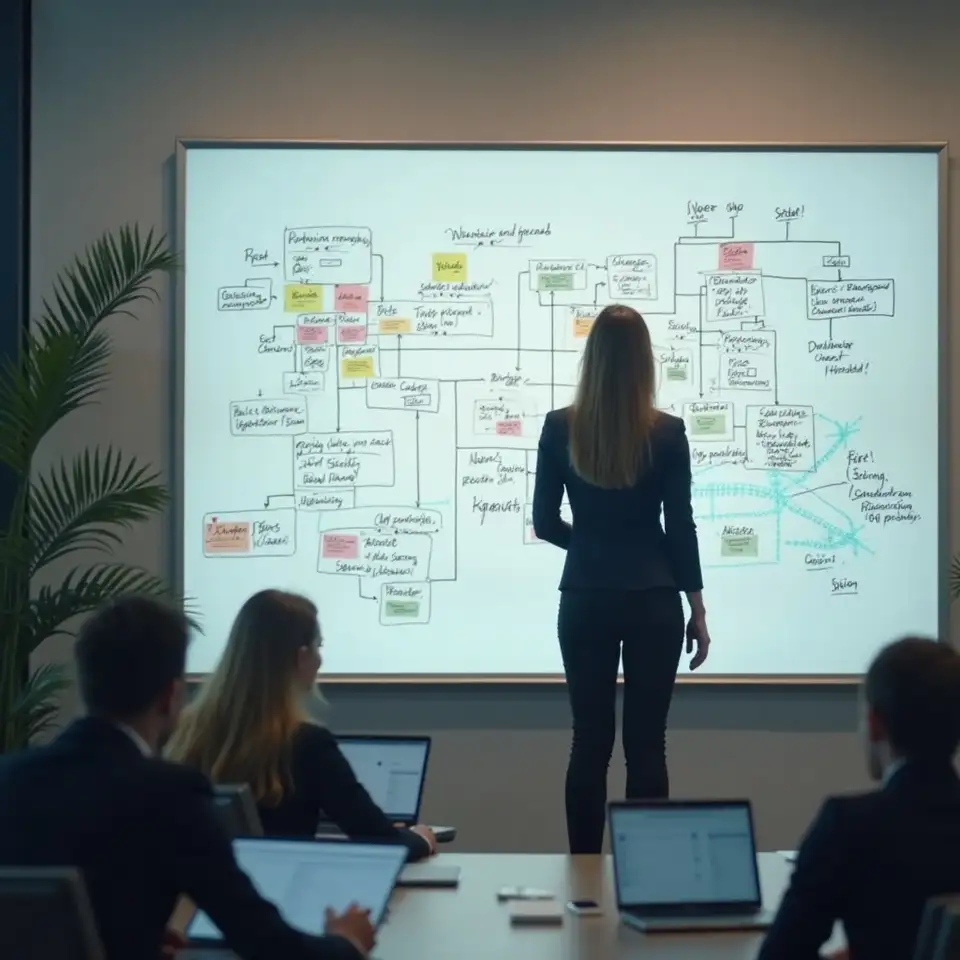
Every engagement begins with what I call a Process Inventory — a structured audit that counts, categorises, and scores every workflow across both organisations before a single decision is made. Think of it as a building survey before a renovation: you would not knock down a wall without knowing whether it is load-bearing. The same logic applies here, and the numbers from that inventory drive every recommendation that follows.

Cause, Effect, and Honest Advice
Redundant approval chains cause delays; delays cause missed commitments; missed commitments erode the trust that made the merger worthwhile in the first place. I trace those chains back to their source and say plainly what needs to change, even when the answer is inconvenient. Budget-conscious organisations appreciate that candour, because it means effort is directed at root causes rather than symptoms.

Methodology Built for Practicality
My three-phase Consolidation Framework — Assess, Align, Activate — moves organisations from diagnostic clarity through stakeholder alignment to live implementation. Each phase produces a tangible deliverable: a scored process map, a prioritised integration roadmap, and a monitored transition plan. No phase begins until the previous one is signed off, which keeps scope from expanding and budgets from drifting.
Honest methods, measurable outcomes, and a deliberate pace that respects the complexity of combining two organisations into one coherent operation
The Principles Behind My Approach to Post-Merger Process Work
What Working With Me Actually Looks Like in Practice
The engagement begins with a scoping conversation — not a sales pitch, but a genuine diagnostic exchange. I ask about the size of each legacy organisation, the nature of the overlap, the timeline pressure, and the budget envelope. Those four variables shape everything that follows, and I would rather surface a mismatch in week one than discover it in week eight.
Once scope is agreed, the Process Inventory begins. This is the most time-intensive phase, and deliberately so. My lead consultant works alongside your operational teams to document workflows at the task level, not the department level. The difference matters: two departments can share a name and perform entirely different functions, and a department-level view will miss that entirely.
The Align phase translates the inventory findings into a prioritised roadmap. I present this roadmap in a structured review session with your senior stakeholders, walking through the cause-and-effect logic behind each recommendation. Nothing is implemented until your team has interrogated the reasoning and agreed the sequence. That sign-off process is not a formality — it is the mechanism that keeps the project on budget.
My Commitment to Practical Clarity

There is a version of this work that produces impressive-looking deliverables and very little actual change. I have seen it, and I find it genuinely frustrating — not least because it tends to be expensive. The practice I have built is oriented around the opposite: modest documentation, clear decisions, and a transition plan that your operations director can run without a full-time consultant in the room. That last point is important. The goal of every engagement is to make my continued involvement unnecessary. A consolidated process architecture should be self-sustaining, understood by the people who operate it, and documented well enough to onboard new staff without tribal knowledge. When I hand over the final Activation package, it contains not just the integrated process maps but the rationale behind every structural decision — so that six months later, when a new team member asks why things work the way they do, there is a written answer waiting for them.
The Beliefs That Shape Every Engagement I Take On
These are not aspirational statements drafted for a website; they are the working assumptions I bring to every Process Inventory, every roadmap review, and every difficult conversation with a client stakeholder
Measurement precedes every recommendation I make
Cause and effect must be traced all the way back
A duplicated approval step is a symptom, not a root cause. I follow the chain backwards until I find the structural decision — usually made during a previous reorganisation — that created the duplication in the first place. Treating symptoms without understanding their origin is like patching a roof without finding the source of the leak: the problem migrates rather than disappears.
Transparency with clients is a working method, not a value statement
Simplicity is a discipline, not a default
A Few Things I Think Are Worth Saying Plainly About This Kind of Work
Post-merger process consolidation is not a tidy project with a clean finish line — it is a sustained effort that rewards patience, rigour, and a willingness to say uncomfortable things out loud
Four Reasons Organisations Choose to Work With Me
Sequenced by budget impact first
Every roadmap I produce orders recommendations by the ratio of friction reduction to implementation cost. The changes that deliver the most operational relief for the least expenditure appear first, so organisations see tangible improvement without committing the full integration budget upfront.
No phase begins without sign-off
The three-phase Consolidation Framework is gate-controlled: each phase produces a deliverable, and the next phase does not begin until that deliverable is reviewed and approved. This structure prevents scope from drifting and keeps the engagement on the timeline and budget agreed at the outset.
Documentation built for internal ownership
The final Activation package is written for your operations team, not for me. Every process map includes a plain-language rationale so that new staff can understand the decisions behind the architecture without needing to consult the original engagement records.
Findings shared in full, always
I do not filter the Process Inventory before presenting it. Every finding — including the ones that reflect poorly on inherited structures — is included in the client report. Organisations that understand the full picture make better decisions about where to focus their integration effort and their budget.
About This Practice
I founded this practice on a single observation: the operational cost of a poorly consolidated merger almost always exceeds the cost of doing the consolidation work properly in the first place. That arithmetic is not complicated, but it is consistently underestimated — and the underestimation tends to be most painful for organisations that were already watching their budgets carefully.
The work I do sits at the intersection of operational analysis and organisational honesty. I map what is actually happening, trace the causes of what is going wrong, and produce a sequenced plan for making it better — one that your team can own and sustain without ongoing external support.
If you are in the middle of a merger integration and the process landscape feels more tangled than it should, I would be glad to have a scoping conversation. Please feel free to visit the contact page and send through a brief description of where you are in the process.